Enterprise AI governance has concentrated on model approval, data access, logging and human oversight. A harder question is moving to the foreground: how can an organization prove that sensitive prompts, proprietary model weights and regulated data remain protected while an AI system is actively processing them?
Encryption already covers much of the journey into and out of the cloud, and it can protect stored data. Confidential computing addresses the execution stage by using hardware-enforced trusted execution environments to isolate workloads and their data while in use. That makes the technology increasingly relevant to AI programs that want cloud-scale infrastructure without treating the host administrator, hypervisor or neighboring tenant as trusted readers of the workload.
AI creates a data-in-use governance gap
The gap is not theoretical. On May 29, 2026, the U.S. National Institute of Standards and Technology published an initial public draft of NIST IR 8320E describing a reference approach for protecting data used by AI workloads in cloud infrastructure. NIST presents confidential computing as an extension of encryption to data in active use and frames the report as a blueprint the security community can validate. Because the document remains a draft, it should inform architecture reviews rather than be treated as a final compliance standard.
The business issue is broader than encryption. AI workloads combine valuable assets that often belong to different parties: customer records, licensed datasets, private prompts, retrieval indexes, proprietary models and generated outputs. Traditional access controls can restrict who starts a job, but they do not by themselves prove what environment received the secrets or whether the approved hardware and software state was present at execution time.
Attestation turns isolation into an enforceable policy
Remote attestation supplies evidence about the workload environment before sensitive material is released. The Confidential Computing Consortium explains that attestation lets a relying party evaluate whether a confidential program or environment should be trusted. In practice, a verifier can compare hardware and software measurements with an organization’s approved policy, while a key-management service releases a decryption key only when the evidence meets that policy.
This changes governance from a document checked before deployment into a control that can operate at runtime. A company could require a particular processor security mode, signed firmware, approved workload image and defined software configuration before a model or dataset becomes usable. The attestation result can also become part of the audit trail, giving risk teams evidence about where and how a high-value workload ran.
That pattern complements the identity, inventory and monitoring disciplines discussed in WiredBusiness’s analysis of the enterprise AI control plane. Agent permissions govern what an AI system may reach; attestation helps govern the environment allowed to handle the underlying secrets.
Confidential GPUs make the model operationally relevant
Recent infrastructure releases show the approach moving beyond CPU-only workloads. On October 21, 2026, Google Cloud said Confidential G4 instances with NVIDIA Blackwell GPUs became generally available across 36 zones through Compute Engine virtual machines and Google Kubernetes Engine nodes. Google says the service combines non-exportable hardware keys, remote attestation and memory encryption, and that customers can use standard Ubuntu images, NVIDIA drivers and CUDA-X libraries without refactoring applications. Those are vendor claims, but the release is significant because deployment friction has been one of the barriers to making confidential AI routine.
NVIDIA’s published trust and threat model is equally important because it defines limits. The CPU trusted execution environment isolates the virtual machine from privileged host software, while GPU confidential-computing modes protect supported GPU paths. Yet guest software, workload administrators, attestation services and key-release policies remain inside the trusted computing base. Some multi-GPU configurations also protect interconnects differently. Confidential computing reduces the parties and components that must be trusted; it does not remove trust or replace application security.
Procurement must specify evidence, boundaries and recovery
Enterprise buyers should therefore avoid a generic “confidential computing supported” checkbox. Procurement requirements should name the workload assets being protected, the adversaries in scope, the approved CPU and GPU modes, the measurements required for attestation, the party operating the verifier, and the conditions under which keys are released or revoked. Teams should also test how evidence is retained for audits and what happens when firmware, drivers or container images change.
The architecture belongs inside a wider workload-placement strategy. As WiredBusiness noted in its analysis of regulated cloud as an infrastructure portfolio, location labels do not settle questions of administration, key custody, portability or shared responsibility. Confidential execution can strengthen one control domain, but organizations still need data classification, least privilege, secure software supply chains, monitoring and an exit plan.
The governance opportunity is verifiable execution
The strategic value of confidential computing is not that every AI workload should use it. Low-sensitivity experimentation may not justify the cost or operational complexity. The strongest candidates are workloads whose economics depend on using sensitive data or valuable models in infrastructure that multiple parties do not fully trust.
For those cases, the technology gives governance teams a more concrete question to ask: not merely whether a provider promises isolation, but whether the organization can verify the execution state before releasing its most valuable assets. That moves confidential computing from a specialized security feature toward infrastructure for enforceable AI policy.
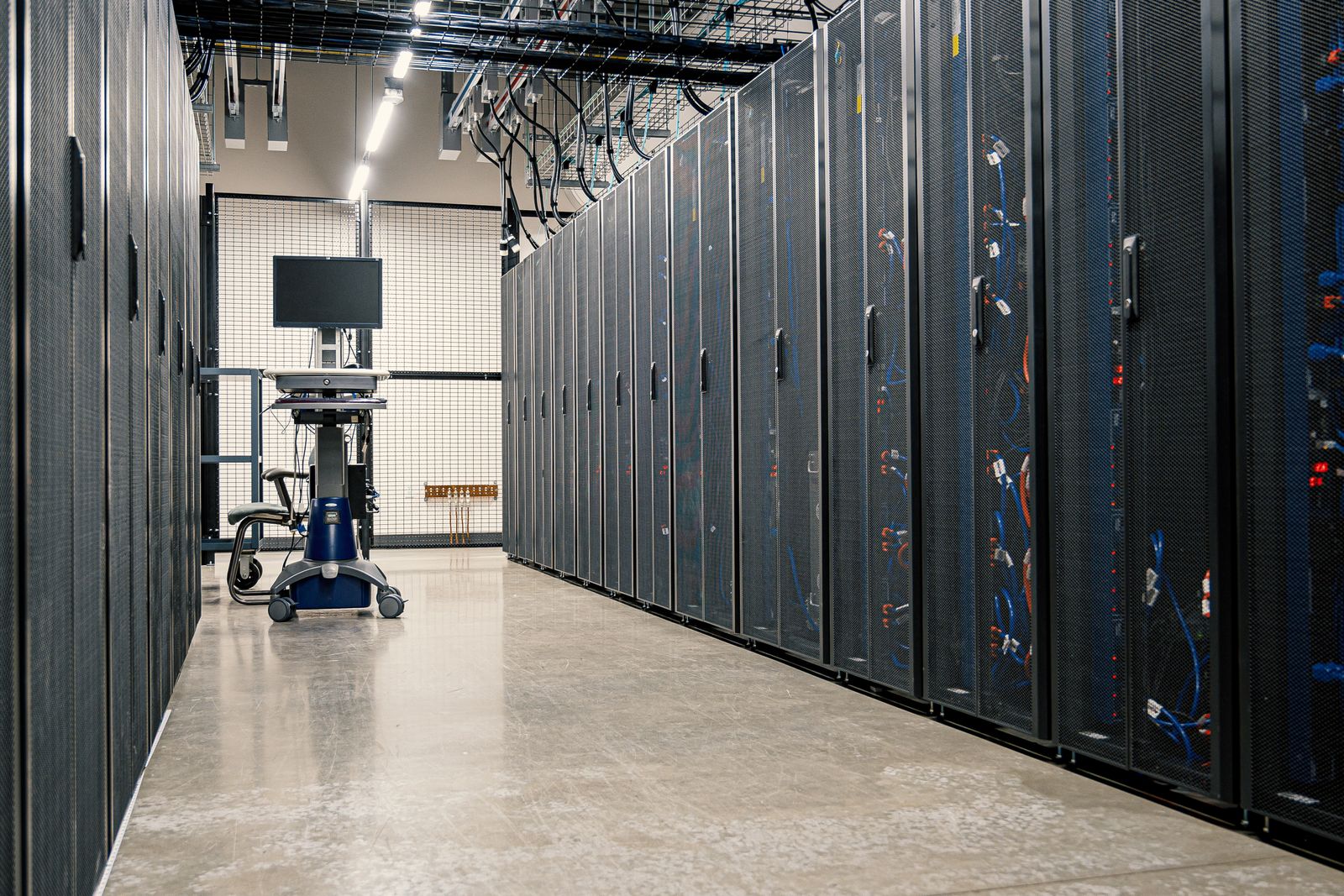
Illustration generated for WiredBusiness.